Find a Pain Clinic
 952-841-2345

 952-841-2345
Comparing SI Joint Fusion Options: iFuse INTRA X® vs. iFuse TORQ®
SI joint dysfunction treatment can bring relief to those dealing with ongoing lower back and hip pain. The sacroiliac (SI) joint links your spine to your pelvis and supports your upper body weight during everyday movements. If this joint becomes damaged or unstable, it can lead to intense pain spreading through your lower back, hips, and legs.
Millions of people experience SI joint issues, which can make even basic activities like walking very challenging. If physical therapy, medications, or injections do not provide long-term relief, joint fusion might be needed. Two minimally invasive options are the iFuse INTRA X® and iFuse TORQ® procedures.

Let’s discuss how these surgeries work, when they are recommended, and what recovery looks like.
KEY TAKEAWAYS
- The sacroiliac or “SI” joint links the bottom most part of the spine to the pelvis; when the SI joint becomes unstable or damaged, it can cause lower-back, hip, and leg pain.
- The iFuse INTRA X® system uses two small, cylindrical bone-allograft implants that are placed into the space between the SI joint to promote natural fusion and stability.
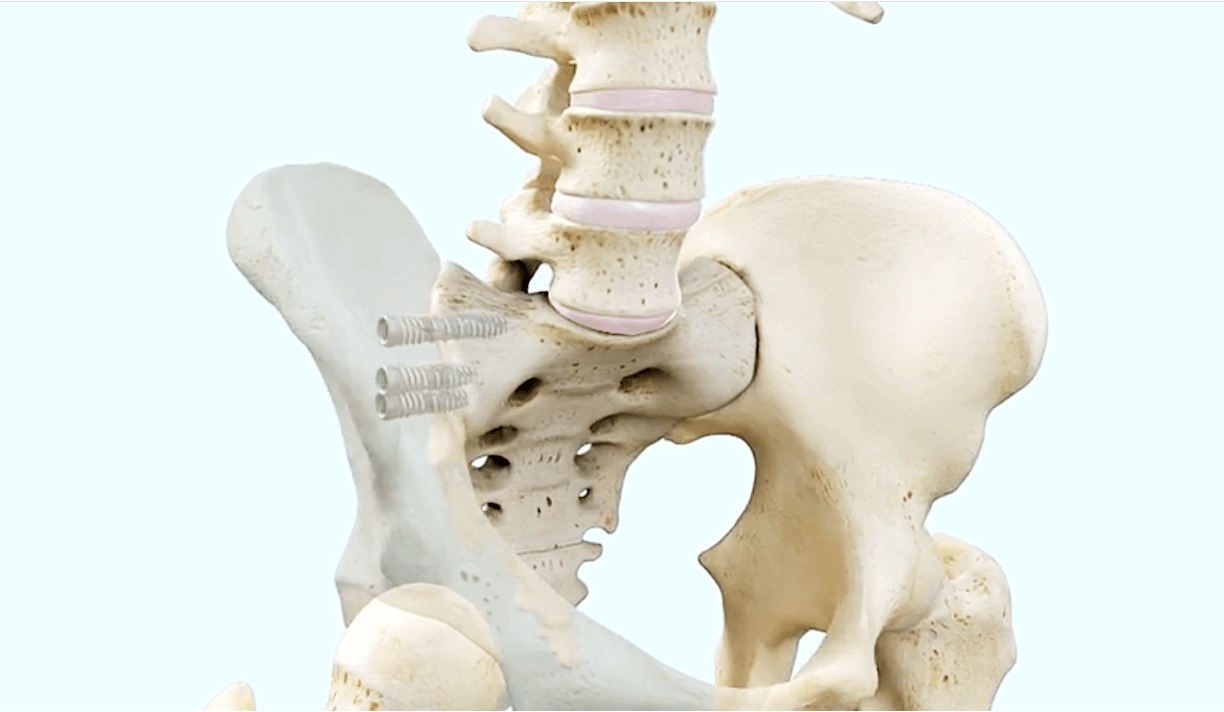
- The iFuse TORQ® system uses three screw-style titanium implants traversing the joint laterally; like the INTRA X procedure, TORQ promotes natural bone fusion within the SI joint. TORQ is designed for cases of SI joint dysfunction that require greater mechanical support (e.g., weaker bones, prior surgery) than INTRA X.
- Both procedures are minimally invasive, allow rapid initial mobility (walking within a day or two), and aim for full bone fusion by around 3-6 months. Recovery timelines vary a bit between the two.
- The choice between INTRA X vs. TORQ largely depends on individual patient factors: bone quality, anatomy complexity, prior surgeries/fractures, and how much structural support is needed.
iFuse INTRA X®: What it does and who it helps
During the iFuse INTRA X® procedure, two small, cylindrical-shaped implants are placed inside the SI joint. This implant helps the bones in the joint to grow together over time, reducing the unusual movement that causes pain.
Made from bone allograft material, the implant’s surface encourages natural bone growth in the surrounding tissues, creating a strong, natural fusion. The implant helps form a connection between the sacrum and ilium bones, stabilizing the joint and preventing painful movements.

Surgery details
Surgeons use special tools to insert the implant through a tiny incision in the lower back with minimal disruption to surrounding tissues.
This method avoids major muscle damage, significantly reduces the risk of nerve damage, and allows for quicker recovery compared to traditional open surgery.
Because the technique is minimally invasive, it causes less surgical trauma. Patients feel less pain after surgery and can return to daily activities sooner. The implant is carefully positioned to ensure the best chance for successful bone fusion.
Who is a good candidate for INTRA X®?
The INTRA X® procedure is intended for adults, as success relies heavily on patients having a mature, fully developed skeletal structure. The patient must be diagnosed with an SI-joint disorder, meaning a pain specialist has determined that symptoms can be reasonably attributed to the SI-joint.
Most qualified patients will have undergone other non-surgical treatments, such as physical therapy or injections, without getting adequate relief.
Preexisting issues such as an active infection, poor bone quality, localized scar tissue, or medical conditions that preclude safe surgery may disqualify patients from the INTRA X® procedure.
Recovery process
Most patients are already walking within 24 hours of the procedure and can return to light activities within two weeks. Full recovery typically occurs within three to six months after bone fusion is complete. Your doctor will help you determine when you are ready to return to full activity.
Healing happens gradually as bone grows into the implant. Regular check-ups help track progress and address any concerns during the recovery period.
Physical therapy is also prescribed between six and 12 weeks to help improve strength and promote better results.
iFuse TORQ®: What it does and who it helps
The iFuse TORQ® system uses screw-shaped titanium implants that go all the way through the SI joint. Usually, three implants are placed laterally through the SI joint. This helps provide stability and minimize movement that could interfere with the fusion and healing process.
The implants are designed to tightly grip the bone, providing strong and stable support, while the implant texture promotes natural fusion between the bones and within the implant itself. This creates a strong bond that helps ensure the implant stays in place.
Surgery details
Surgeons make a small incision of about three centimeters on the side of the hip. Three screw- like implants are then placed through the SI joint. Advanced imaging tools are used during surgery to ensure the screws are placed precisely.
The minimally invasive procedure is generally completed in less than an hour. Patients go home the same day and experience fewer complications and faster recovery than with traditional fusion surgeries.
Who is a good candidate for TORQ?
The basic criteria for TORQ® are similar to INTRA X®: adult patients with a diagnosed SI-joint condition who have not found adequate relief from non-surgical treatments.
TORQ® will generally be recommended over INTRA X® for patients who:
- Need more durable support, such as those who have weaker bones or previous spine surgery
- Have had a pelvic fracture
- Have naturally more complex anatomy
- For any other reason that requires a greater mechanical stability than the INTRA X® can provide
Recovery process
Most patients can start walking within a day or two after surgery. Light activities can usually resume in two to six weeks. However, full recovery may take about three to six months. The strong initial support allows patients to move sooner compared to other methods.
Physical therapy starts shortly after surgery to help maintain strength and mobility. The secure implants let patients join rehab programs without worrying about the screws shifting or loosening.
FAQs
iFuse INTRA X® uses bone-allograft implants placed inside the joint to promote natural fusion, while iFuse TORQ® uses lateral titanium screw-style implants designed to provide greater immediate mechanical stability. The best option depends on anatomy, bone quality, and prior medical history.
Both systems aim to achieve long-term joint fusion, but iFuse TORQ® may be preferred for patients who need higher structural support, such as those with weaker bone density or a history of pelvic trauma or surgery. Your provider determines the best fit based on imaging and clinical evaluation.
Most patients can walk within a day or two after either procedure. Full fusion and functional recovery typically take 3–6 months, with variations depending on implant type, bone health, and adherence to post-operative guidelines.
Yes. Both iFuse INTRA X® and iFuse TORQ® are minimally invasive procedures performed through small incisions with limited tissue disruption, leading to faster recovery compared to traditional fusion surgeries.
Your pain specialist or surgeon will evaluate imaging results, medical history, bone density, and overall anatomy to determine whether the INTRA X® allograft approach or the TORQ® titanium implant approach aligns better with your needs.
SI joint dysfunction treatment in Burnsville, Chaska, Edina, Maple Grove, Maplewood, and Woodbury, MN
If you’re experiencing chronic low back, hip, or buttock pain and conservative treatments haven’t provided sufficient relief, minimally invasive SI joint fusion could be a life-changing option.
At Twin Cities Pain Clinic, our experienced pain management specialists are experts in accurately diagnosing sacroiliac joint pain and administering the iFuse SI joint fusion procedures to relieve chronic pain.
We understand the impact chronic pain can have on your life, and we are committed to helping you find lasting relief and regain your quality of life.
For more information or to request a consultation and discuss your SI joint treatment options, call us today at (952) 841-2345 or use our appointment request form.
Author Bio