 Find a Pain Clinic
 952-841-2345

 952-841-2345
Minimally Invasive Relief: The Minuteman® Procedure for Spinal Stenosis
Spinal stenosis occurs when the spinal canal becomes too narrow, putting pressure on the nerves that run through it. This can cause pain or numbness, most commonly in the lower back. It can significantly limit function and mobility, making everyday tasks hard to manage.
Many people with this condition feel worse when standing or walking. They often need to lean on objects like shopping carts or take frequent breaks to sit down. For this reason, spinal stenosis has been given the nickname, “shopping cart syndrome.” For some, treatments like physical therapy, medications, or injections can help, but these do not always work, especially in the long term.

The Minuteman® procedure is a minimally invasive, opioid-free treatment for managing pain caused by spinal stenosis. It can provide long-term pain relief without the risks and long recovery time of traditional open surgery.
KEY TAKEAWAYS
- Lumbar spinal stenosis (LSS) is a common chronic pain condition that occurs when a narrowing of the spinal canal pinches the nerves running through it. LSS can cause significant pain or numbness, usually in the lower back, which often inhibits function and mobility.
- The Minuteman procedure is a minimally invasive, drug-free treatment that can provide long-term relief from LSS pain. A small implant is placed between two adjacent vertebrae bones, promoting natural bone fusion and locking the implant in place. The implant supports the spine and prevents the vertebra from collapsing or slipping out of place.
- Minuteman is a minimally invasive procedure that only uses a very small incision. This outpatient method offers several benefits over traditional, more invasive surgeries, such as less pain, shorter recovery, reduced risk of complications, and a lack of opioids.
- The ideal candidate for Minuteman is a patient suffering from LSS who has not found adequate pain relief from physical therapy, anti-inflammatory medications, and steroid injections.
Table of Contents
- What is the Minuteman® procedure for spinal stenosis?
- How is Minuteman different from traditional surgery?
- Ideal candidates for the Minuteman implant procedure
- Benefits and success rate of the Minuteman® procedure
- Is the Minuteman procedure safe?
- Recovery and long-term outlook
What is the Minuteman® procedure for spinal stenosis?
The Minuteman procedure is a minimally invasive way to treat lumbar spinal stenosis pain.
In this procedure, a surgeon places a small implant between two adjacent vertebrae bones in the spine. Bone graft material inside the device allows the implant to fuse with the surrounding tissue, locking it in place. This implant provides support for the vertebrae, keeping them from pressing together and creating more space for the nerves in the spinal canal.
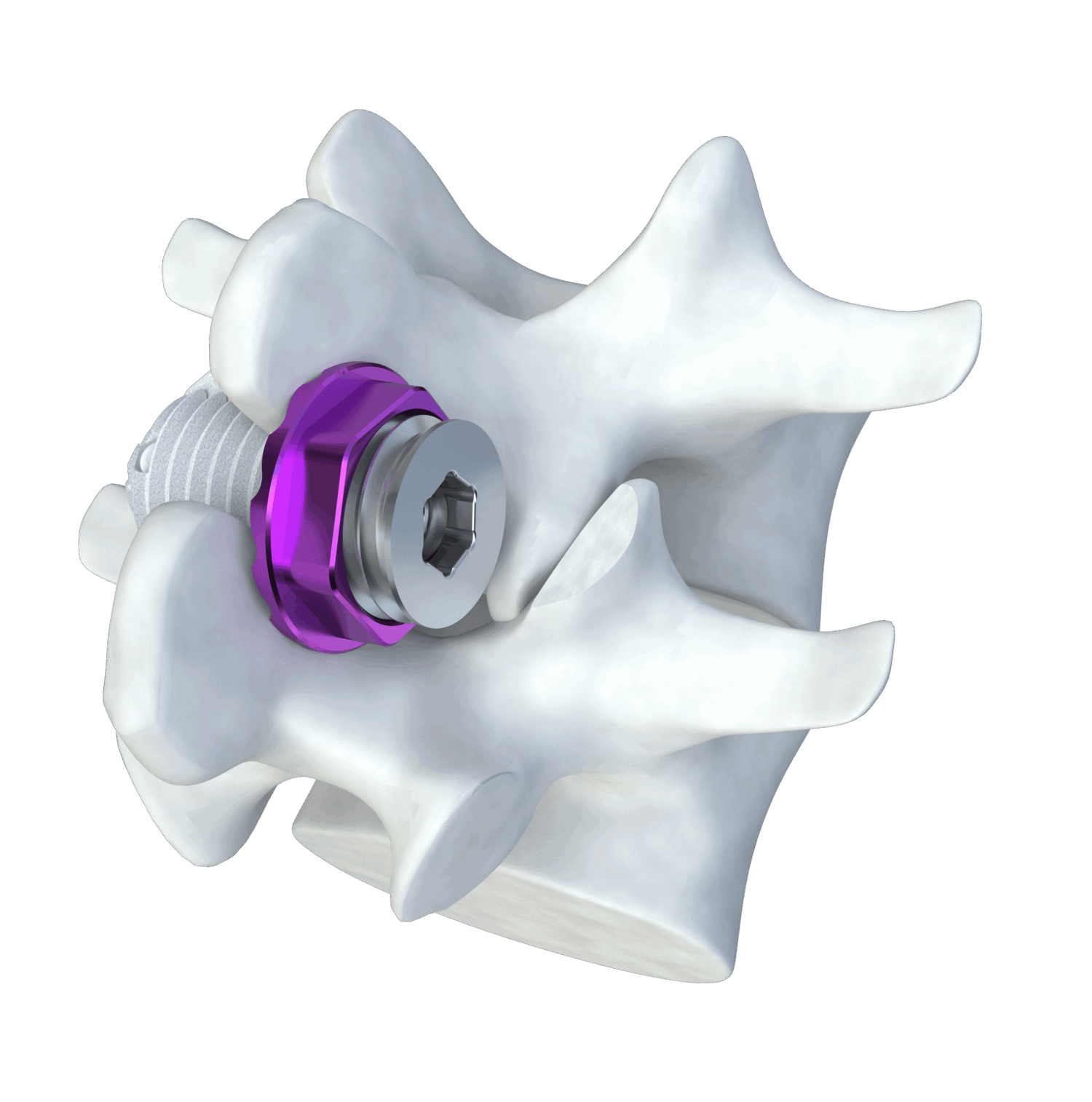
The result is substantial, long-term pain relief without relying on invasive surgery or opioid pain medications.
How is Minuteman different from traditional surgery?
Traditional spinal fusion surgery involves large incisions and the removal of a lot of bone and tissue to reach the spine. This can lead to longer hospital stays and months of recovery.
The Minuteman procedure, on the other hand, uses a much smaller incision, usually less than one inch long.
Surgeons use a natural opening to access the spine. This way, they do not need to cut through major muscles or remove bone. This outpatient method:
- Causes less tissue trauma
- Reduces pain after the procedure
- Does not require overnight stays
- Allows for a brief recovery timeline
- Avoids the risks of opioids and invasive surgery
Ideal candidates for the Minuteman implant procedure
Not everyone with spinal stenosis needs surgery. The Minuteman procedure is best for certain patients who meet specific conditions.
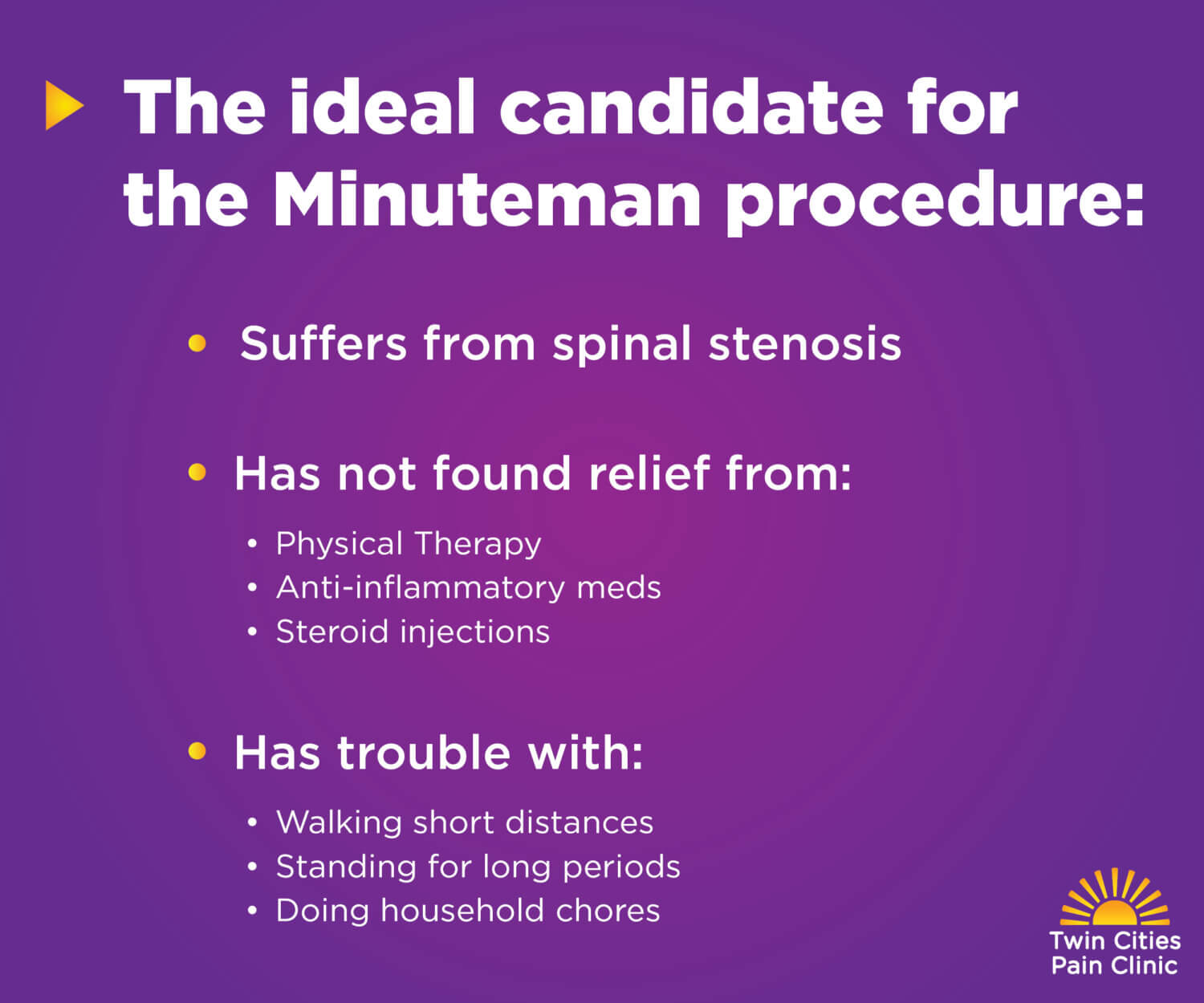
The ideal candidates are those who have tried non-surgical treatments without sufficient pain relief. These treatments may include:
- Physical therapy
- Anti-inflammatory medications
- Steroid injections
Scans like MRIs or CTs must show that nerves are being compressed. The severity and location of the problem will help decide if the Minuteman procedure is a good fit.
Most candidates will also have trouble with daily activities, such as:
- Walking short distances
- Standing for long periods
- Doing household chores
Benefits and success rate of the Minuteman® procedure
Studies show that the Minuteman® procedure works very well for the right patients. Most people see big improvements in their pain levels and ability to walk.
Proven success rates
Over 80% of patients report feeling much better after the Minuteman procedure. Many can walk longer distances without pain or numbness in their legs1. Patient satisfaction is high, with most saying they would recommend the procedure to others with similar issues.
Advantages over traditional surgery
The Minuteman® procedure is less invasive than traditional surgeries such as spinal fusion. This minimally invasive approach means less pain after surgery and fewer pain medications needed.
Recovery is also much faster. Many patients return to light activities in a few days and normal activities in a few weeks. Since it is an outpatient procedure, patients can recover at home, which also helps to significantly lower costs.
Is the Minuteman procedure safe?
Safety is a key benefit of the Minuteman® procedure. The smaller incision and reduced tissue damage reduce the risk of complications like:
- Infection
- Blood loss
- Nerve injury
Serious complications are rare. Most patients only experience minor side effects like soreness or mild swelling. These also usually go away within a few days or weeks.
Importance of surgeon experience
The success and safety of the Minuteman® procedure depend a lot on the surgeon’s experience. Surgeons who are trained in the Minuteman® technique and perform it often tend to get the best results. Patients should look for a surgeon with this specific expertise.
Recovery and long-term outlook
Recovery from the Minuteman® procedure is usually smooth. It allows patients to slowly return to their normal routines.
Rapid recovery
Most patients can walk just a few hours after the procedure. Pain is usually much less than with traditional spine surgery.
Patients go home the same day with instructions for caring for the wound and limiting activities. Light tasks like walking and simple household chores can often be done within a few days.
Long-term recovery and results
Full recovery usually takes 6 to 12 weeks, with physical therapy helping patients regain strength and movement. Most people see big improvements in their ability to walk and stand. They are often able to walk much farther than before surgery.
The long-term results show most patients maintaining function and staying satisfied with their outcomes for years.
FAQs
The Minuteman procedure is a minimally invasive way to treat lumbar spinal stenosis pain. A small implant is placed between two adjacent vertebrae bones in the spine. Bone graft material inside the device allows the implant to fuse with the surrounding tissue, locking it in place. This implant prevents the vertebrae from compressing together or slipping out of place, creating more space for the spinal nerves.
Minuteman is minimally invasive, offering many benefits over traditional, more invasive surgeries, including less tissue trauma, less pain after the procedure, quicker recovery, and reduced risk of surgery-related complications or opioid use.
Candidates for Minuteman have tried non-surgical treatments for spinal stenosis pain, such as physical therapy, anti-inflammatory medications, or steroid injections without sufficient relief. They also generally have trouble with daily activities, such as walking short distances, standing for long periods, or doing household chores.
Over 80% of patients who undergo the Minuteman procedure report significant pain relief. Many can walk longer distances without pain or numbness in their legs. Patient satisfaction is high, with most saying they would recommend the procedure to others with similar issues.
Yes, the Minuteman procedure is safe. Because it is minimally invasive, is significantly reduces the risks commonly associated with surgery, such as infection, blood loss, or nerve damage.
Most patients can walk just a few hours after the Minuteman procedure and experience much less pain than after more invasive surgeries. Patients go home the same day and light tasks like walking and simple household chores can often be done within a few days. Full recovery usually takes 6 to 12 weeks, with physical therapy helping patients regain strength and movement.
The Minuteman® procedure for spinal stenosis in Burnsville, Chaska, Edina, Maple Grove, Maplewood, and Woodbury, MN
The Minuteman® procedure is a minimally invasive option for treating spinal stenosis. It eases pain and improves mobility with less risk and a quicker recovery than traditional surgery. Those who have tried other treatments without success should talk to a skilled pain specialist to see if this procedure can help. Acting early can prevent more nerve damage and help patients regain their independence and quality of life.
The expert team at Twin Cities Pain Clinic specializes in the Minuteman® procedure for spinal stenosis. We are committed to helping patients find relief from their pain and return to the activities they love. For more information or to schedule a consultation, call us today at 952-841-2345 or use our appointment request form.
The contents of this article are intended for informational and educational purposes only and are not intended as a substitute for professional medical advice, diagnosis or treatment. Always consult with a physician or other qualified healthcare provider before engaging in any action or decision-making based on the content of this article. Never disregard or delay seeking professional medical advice or treatment because of the content of this article or any other content on the Twin Cities Pain Clinic website. Reliance on any information conveyed on the Twin Cities Pain Clinic website without direct consultation with a healthcare professional is solely at your own risk.
References:
- Baranidharan G, Bretherton B, Feltbower RG, Timothy J, Khan AL, Subramanian A, Ahmed M, Crowther TA, Radford H, Gupta H, Chandramohan M, Beall DP, Deer TR, Hedman T. 24-Month Outcomes of Indirect Decompression Using a Minimally Invasive Interspinous Fixation Device versus Standard Open Direct Decompression for Lumbar Spinal Stenosis: A Prospective Comparison. J Pain Res. 2024 Jun 13;17:2079-2097. doi: 10.2147/JPR.S453343. PMID: 38894862; PMCID: PMC11182879.
Author Bio


