 Find a Pain Clinic
 952-841-2345

Recovering After Kyphoplasty for Compression Fracture
Recovering from kyphoplasty for a compression fracture is a highly individualized process, but with the right care and attention, most patients can return to their daily activities with improved mobility and reduced pain.
A vertebral compression fracture can severely limit your daily function and mobility. For patients seeking to restore spinal stability and reduce pain, undergoing a kyphoplasty for a compression fracture is often a highly effective intervention.
While the procedure itself is brief, understanding the recovery process is essential for achieving the best possible outcome. This guide provides a detailed overview of what to expect during your recovery, from the first few hours post-procedure to your long-term functional goals.
KEY TAKEAWAYS
- Kyphoplasty can provide rapid pain relief and spinal stabilization for vertebral compression fractures. By restoring vertebral support with medical-grade bone cement, the procedure helps reduce pain, improve mobility, and address structural instability caused by the fracture.
- Recovery is typically quick, with most patients returning home the same day. Because kyphoplasty is minimally invasive, many patients are able to walk within hours of the procedure and continue their recovery from home with appropriate post-procedure care.
- Following activity restrictions is critical for successful healing. Patients should avoid bending, lifting, and twisting during the early recovery period while staying active through gentle walking to promote circulation, reduce stiffness, and support recovery.
- Long-term success depends on rebuilding strength and addressing underlying causes. Follow-up care may include physical therapy to improve spinal stability, along with osteoporosis management and bone health strategies to help reduce the risk of future fractures.
- Kyphoplasty is often a strong option when conservative treatments have failed. Patients with recent, painful compression fractures that continue to limit daily function despite rest, bracing, or medication may benefit from a specialist evaluation to determine whether kyphoplasty is appropriate.
Table of Contents
- Understanding the procedure
- Recovery – The first few hours
- Recovery – The first few days
- Activity restrictions
- Recovery milestones
- When to seek emergency care
- Treatment comparisons
Understanding the procedure
Before diving into the recovery timeline, it is helpful to understand exactly what the procedure entails. A vertebral compression fracture occurs when a spinal vertebra collapses, often due to osteoporosis, trauma, or tumors. This collapse causes structural instability and height loss in the spine.
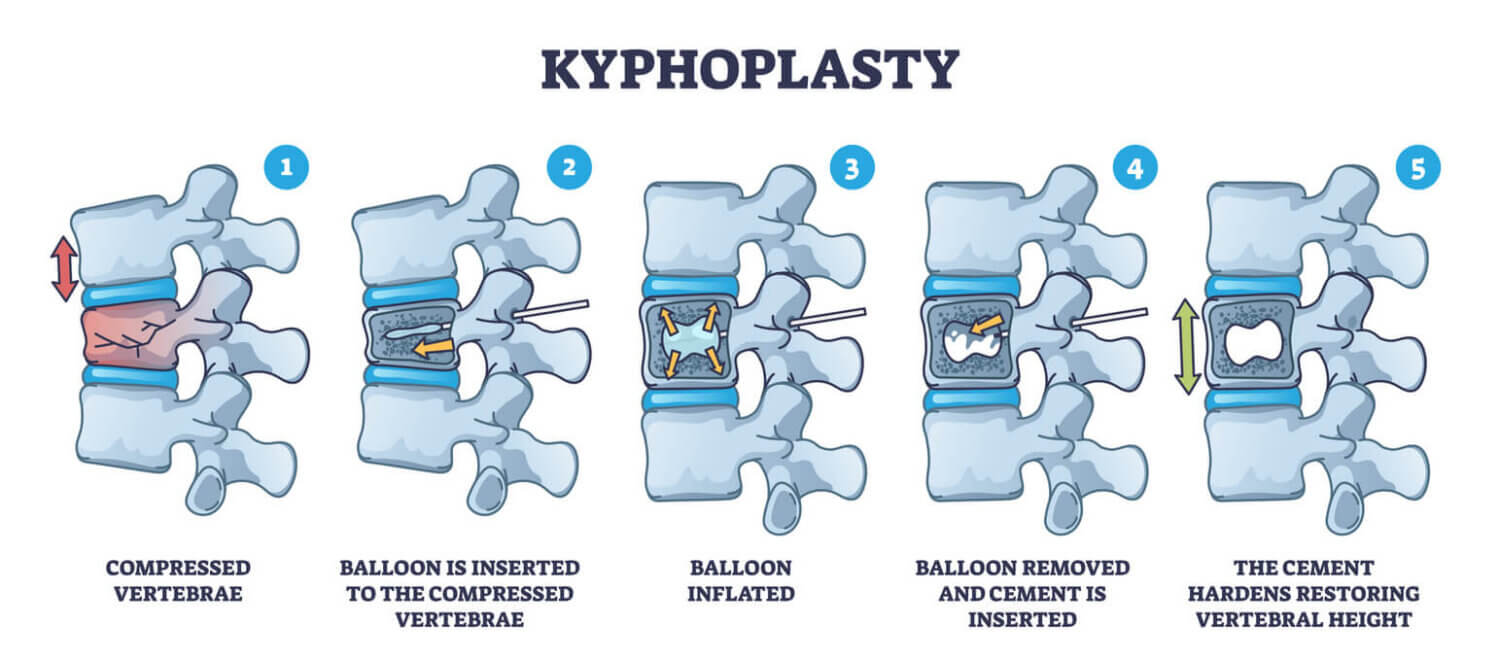
Kyphoplasty is a common and effective procedure for treating these fractures. According to the Cleveland Clinic, over 19,000 are performed each year in the United States. It works by creating a cavity within the collapsed vertebra using a specialized medical balloon.
Once the balloon gently pushes the fractured bone toward its original height, it is removed. The resulting void is then carefully filled with medical-grade bone cement. This cement hardens rapidly, acting as an internal cast to provide immediate structural support and stabilize the fracture.
Because the procedure is minimally invasive, the surgical timeline is highly efficient. The intervention typically takes about an hour per fracture and is performed under local or general anesthesia.
Immediate recovery: The first few hours
Your recovery after kyphoplasty for a compression fracture begins the moment the procedure is complete. Patients are transferred to a recovery room where medical staff monitor vital signs and observe the incision site.
During this immediate post-operative period, you will remain lying flat on your back for a short time to allow the bone cement to fully cure and harden. Within a few hours, the clinical team will assist you in sitting up and walking.
Because it is a minimally invasive procedure, same-day discharge is the standard protocol. Once you can walk steadily and safely, you will be cleared to go home. You will need a responsible adult to drive you home, as you cannot operate a vehicle immediately following anesthesia or while taking post-operative pain medications.
The first few days at home: Pain expectations and care
The first 24 to 72 hours at home focus on managing mild surgical discomfort and protecting the incision site. While the severe pain of the vertebral fracture is often resolved, it is entirely normal to experience some soreness around the incision.
Managing discomfort
To manage post-operative soreness, your care team may recommend over-the-counter pain relievers or prescribe short-term medication. Applying an ice pack to the area for 15 to 20 minutes at a time can also help reduce swelling and tenderness.
Be sure to wrap the ice pack in a clean cloth to protect your skin and the incision.
Incision care
The incision made during a kyphoplasty is very small, typically requiring only a small bandage or surgical strips. Keep the site clean and dry. Your physician will provide specific instructions regarding showering, which generally involves keeping the bandage waterproof or waiting a day or two before letting water run over the area.
Avoid submerging the incision in baths, pools, or hot tubs until your doctor officially clears you to do so.
Activity restrictions and guidelines
A successful recovery requires strict adherence to activity modifications. These restrictions allow the surrounding tissues to heal and prevent unnecessary stress on your spine.
For the first several weeks, you must follow the “BLT” rule:
- No bending: Avoid bending forward at the waist. If you need to pick something up, bend at the knees while keeping your back straight.
- No lifting: Do not lift anything heavier than 5 to 10 pounds (roughly the weight of a gallon of milk).
- No twisting: Avoid twisting your spine. Move your entire body by pivoting your feet when turning.
While heavy physical exertion is restricted, complete bed rest is discouraged. Gentle, frequent walking is highly beneficial. Walking promotes healthy blood circulation, prevents stiffness, and accelerates the healing process.
Start with short walks around your house and gradually increase your distance as your comfort level improves.
Long-term recovery milestones
As you progress through the weeks following your kyphoplasty, you will gradually return to your normal routine. Your physician will schedule a follow-up appointment, typically within the first two to four weeks, to assess your healing, review any necessary imaging, and clear you for advanced activities.
Physical therapy and mobility
Depending on your baseline mobility and the underlying cause of your fracture, your provider may recommend physical therapy. A physical therapist can design a customized, progressive exercise program to strengthen your core and back muscles.
Strengthening these supportive muscle groups enhances spinal stability and helps prevent future injuries.
Addressing bone health
If your compression fracture was caused by osteoporosis, long-term recovery must also include proactive bone health management. This may involve bone density scans, calcium and vitamin D supplementation, and specific medications designed to strengthen your skeletal system.
When to seek emergency care
Kyphoplasty for a compression fracture is widely recognized as a low-risk and effective procedure, but it is important to monitor your body for any signs of complications.
Contact your medical provider immediately or visit the nearest emergency room if you experience any of the following symptoms:
- Sudden, severe, or worsening back pain that does not respond to prescribed medication.
- New or worsening numbness, tingling, or profound weakness in your legs or feet.
- A fever exceeding 101°F or the onset of sudden chills.
- Increased redness, swelling, warmth, or purulent drainage (pus) at the incision site.
- Difficulty breathing or sudden chest pain.
- A new loss of bladder or bowel control.
These symptoms require urgent medical evaluation to ensure your continued safety and health.
Kyphoplasty vs. alternative treatments
When evaluating a kyphoplasty for a compression fracture, it is helpful to understand how it compares to alternative management strategies. The most appropriate treatment depends on the age of the fracture, symptom severity, and your overall health profile.
- Conservative management: This includes pain medication, bracing, and activity modification. While conservative care manages symptoms, it does not correct structural instability or restore lost height. It is typically utilized for minor fractures.
- Vertebroplasty: This is a similar minimally invasive procedure where bone cement is injected directly into the fractured vertebra. However, vertebroplasty does not use a balloon to create a cavity or actively restore vertebral height before the cement is applied.
A thorough evaluation by a specialist will determine the most appropriate intervention for your specific anatomical needs. Good candidates for kyphoplasty typically have recent, painful fractures that have not responded to conservative treatments and cause significant functional impairment.
FAQs
Most patients recover quickly after kyphoplasty and can return home the same day as the procedure. While mild soreness at the incision site may last a few days, many people experience significant pain relief shortly after treatment. Most patients are able to resume light daily activities within days and return to their normal routines within several weeks, depending on their overall health and the severity of the fracture.
During the first few weeks after kyphoplasty, patients should avoid bending, lifting heavy objects, and twisting their spine. These restrictions help protect the treated vertebra and support proper healing. Walking is typically encouraged because it promotes circulation, reduces stiffness, and helps patients regain mobility safely.
It is normal to experience mild soreness, tenderness, or discomfort around the incision site for 24 to 72 hours after kyphoplasty. However, many patients notice that the severe pain caused by the compression fracture improves significantly soon after the procedure. Patients should contact their healthcare provider if they develop severe or worsening pain that does not improve with recommended treatment.
Most patients are encouraged to begin walking within hours of their kyphoplasty procedure. Gentle walking is considered an important part of recovery and can aid healing. More strenuous activities, exercise programs, and lifting restrictions are typically reviewed during a follow-up appointment, when your provider can determine when it is safe to gradually increase physical activity.
Kyphoplasty is often recommended for patients with recent, painful vertebral compression fractures that have not improved with conservative treatments such as rest, bracing, or pain medication. Ideal candidates generally experience significant pain, reduced mobility, or difficulty performing daily activities because of the fracture. A specialist evaluation is necessary to determine whether kyphoplasty is the most appropriate treatment option.
Kyphoplasty stabilizes the fractured vertebra by filling it with medical-grade bone cement, which helps reduce pain and restore structural support. While the treated fracture is stabilized, patients with underlying conditions such as osteoporosis should continue managing their bone health to help prevent future compression fractures. Long-term care may include physical therapy, bone density monitoring, and osteoporosis treatment.
Schedule kyphoplasty for compression fractures at Twin Cities Pain Clinic
If a vertebral compression fracture is impacting your life, kyphoplasty may be an effective treatment option. Our pain management specialists will conduct a thorough evaluation to determine if this procedure is right for you and create a comprehensive care plan to restore function and mobility.
We are dedicated to delivering advanced, minimally invasive treatments that support your goals. Contact the experts at Twin Cities Pain Clinic to learn more about kyphoplasty and how we can help you achieve lasting relief.
Call us at (952) 841-2345 or use our online appointment request form today.
Author Bio


