Find a Pain Clinic
 952-841-2345

 952-841-2345
What Is the Recovery Time for Minimally Invasive SI Joint Fusion?
The sacroiliac joint connects your spine to your pelvis and plays a crucial role in supporting your body weight. When this joint becomes damaged or inflamed, it can cause severe pain in the hip, buttocks, and lower back that affects your daily activities. Minimally invasive SI joint fusion offers a modern solution for chronic sacroiliac joint pain.
This procedure provides hope for patients who have not found relief through conservative treatments. Understanding the recovery timeline helps patients prepare for surgery and set expectations.

KEY TAKEAWAYS
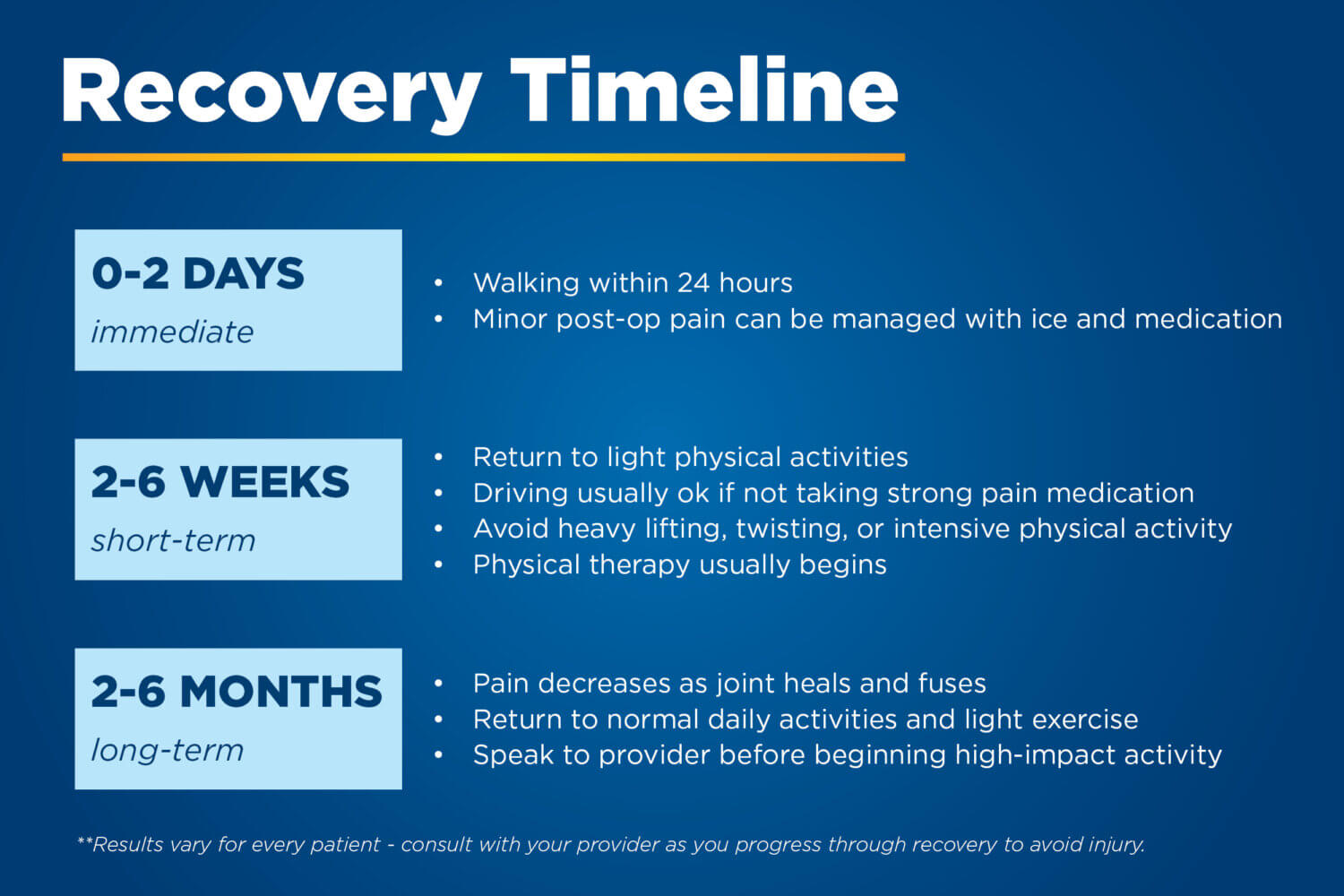
- Recovery from minimally invasive SI joint fusion occurs in stages: Within 0–2 days, most patients begin walking (sometimes with assistance); most patients post-operative aches and pain which can be managed with ice and over-the-counter medication.
- In the 2–6 weeks period after surgery, patients can resume light daily activities like cooking or cleaning; driving may be possible after ~2 weeks if pain meds are minimal.
- By 2–6 months, many patients return to most normal activities and low-impact exercise; maximum pain relief and return to high-impact activities may take up to six months.
- Factors like overall health, age, smoking, prior joint damage or surgery, and adherence to post-operative instructions all affect how quickly recovery proceeds.
- While minimally invasive fusion tends to offer safer and faster recovery than traditional open surgery, the procedure still carries risks (infection, nerve injury, implant movement) and the possibility that pain may not fully resolve.
Table of Contents
- What is minimally invasive SI joint fusion?
- Recovery timeline
- Factors that affect recovery speed
- Risks and limitations
What is minimally invasive SI joint fusion?
Minimally invasive SI joint fusion is an outpatient surgery designed to stabilize the SI joint using small implants. Pain management doctors make a small incision, usually less than three inches long. They use X-ray guidance to place tiny implants in the joint. These implants stabilize the joint while promoting bone growth between the spine and pelvis, creating a strong, natural fusion.
Unlike traditional open surgery, this method causes less trauma to nearby muscles and tissues, which helps ensure a shorter and less painful recovery.
Recovery timeline for minimally invasive SI joint fusion
Recovery happens step by step, with each stage allowing you to regain more function and mobility. Knowing these stages can help you plan your return to routine activities.
Immediate recovery (0-2 days)
Most people start walking with help within 24 hours after surgery. Walking improves blood flow and helps prevent complications. You might feel some pain, but medication can help manage it.
Short-term recovery (2-6 weeks)
During this time, you can slowly return to light daily activities like cooking or light cleaning. Your doctor may recommend walking with assistive devices, like a walker or crutches, for at least part of this recovery period to ensure safety.
Driving is usually OK after two weeks if you are not taking strong pain medication. Avoid heavy lifting, twisting, or intense, high-impact activities during this time.
Physical therapy often starts during this phase. Therapists teach you safe ways to move and help you strengthen muscles around the SI joint. Following their advice can speed up your recovery.
Long-term recovery (2-6 months)
Pain keeps decreasing as the joint heals and fuses. Many people feel well enough to return to normal daily activities and low-impact exercise within two months.
Full pain relief and return to high-impact activities can take up to six months. It is advised that you speak with your surgeon before returning to more intensive activity.
Factors that affect recovery speed
Several things can impact how quickly you heal:
- Age: Younger people often recover faster than older As we age, our bodies produce less collagen (a protein that promotes cell growth) while both our immune systems and blood flow slow down. This, in turn, slows the body’s natural healing process.
- Health: Being in good overall health helps speed up A nutritious diet supplies protein, vitamins, and minerals for tissue repair, while regular exercise improves circulation and delivers oxygen to damaged areas.
- Rules: Carefully following your doctor’s instructions after surgery can make recovery quicker. Failure to follow post-operative instructions could aggravate the surgical area, slow the healing process, and possibly lead to infection or further injury.
Sticking to your prescribed physical therapy plan is very important. Regular exercises keep your SI joint moving and your muscles strong.
Avoid smoking, as it can inhibit blood flow, increase inflammation, and impair collagen production, all of which can delay wound healing.
The condition of your joint before surgery also matters. If the joint was badly damaged, recovery might take longer. Previous surgeries in the same area can also affect healing time.
Have logical expectations. Don’t forget that each body is different and may respond differently to the procedure. Don’t get discouraged if your healing takes longer than you want it to. As long as you stay diligent and follow the rules of recovery, you will be enjoying your newfound pain relief in no time.
Risks and limitations of SI joint fusion
Like any surgery, SI joint fusion has some potential risks. Since this is a minimally invasive procedure, such complications are especially rare. But knowing about these risks can help you make an informed decision about your treatment.
Possible risks
- Infection at the surgery site, which can be reduced with antibiotics
- Rare nerve injuries during the procedure
- Blood clots, especially if you are not active after surgery
- Implants might move from their original position, though this is uncommon with modern designs
- Some patients may still feel pain if the joint does not fuse properly
Limitations of the surgery
The procedure may not completely remove all pain. Some people feel a lot better, while others see only small improvements.
Recovery takes time and effort. Some people find it hard to follow activity restrictions during healing. Having realistic expectations can help you feel more satisfied with the results.
FAQs
Most patients are walking within a couple of days after surgery. Light activities can usually resume within 2–6 weeks, and full recovery—including a return to higher-impact activities—typically occurs within 2–6 months.
Patients can often return to driving about two weeks after surgery, as long as they are no longer taking narcotic pain medications and feel comfortable operating a vehicle.
Recovery varies depending on factors like age, overall health, smoking status, bone quality, prior joint damage, and how closely post-operative care instructions are followed.
Yes. Minimally invasive techniques typically cause less tissue damage, employ smaller incisions, and result in faster healing and reduced postoperative pain compared to traditional open surgery.
Many patients notice gradual improvement over several weeks, but it can take up to six months to experience the full benefits as the joint fuses and the body heals.
Minimally invasive SI joint fusion in Burnsville, Chaska, Edina, Maple Grove, Maplewood, and Woodbury, MN
Minimally invasive SI joint fusion offers effective relief for chronic sacroiliac joint pain. Most patients experience faster recovery compared to traditional open surgery. Walking begins within 24 hours, light activities resume in weeks, and full recovery is achieved in just a few months.
Success depends on proper patient selection and surgical expertise. Discussing risks, benefits, and costs with a qualified pain specialist is essential.
Trust Twin Cities Pain Clinic for expert evaluation and treatment of your SI joint pain. Our experienced team provides comprehensive care from diagnosis through recovery. Call us at (952) 841-2345 or request an appointment online to schedule a consultation today.
DISCLAIMER
The contents of this article are intended for informational and educational purposes only and are not intended as a substitute for professional medical advice, diagnosis or treatment. Always consult with a physician or other qualified healthcare provider before engaging in any action or decision-making based on the content of this article. Never disregard or delay seeking professional medical advice or treatment because of the content of this article or any other content on the Twin Cities Pain Clinic website. Reliance on any information conveyed on the Twin Cities Pain Clinic website without direct consultation with a healthcare professional is solely at your own risk.
References:
- Clinic, Cleveland. “SI Joint Fusion Is Surgery to Permanently Join the Bones in Your Sacroiliac Joint Together. Surgeons Use It to Treat Severe Lower Back Pain.” Cleveland Clinic, 23 July 2025, my.clevelandclinic.org/health/procedures/si-sacroiliac-joint-fusion.
- “Sacroiliac Joint Clinic – Overview.” Mayo Clinic, 2024, www.mayoclinic.org/departments-centers/sacroiliac-joint-clinic/overview/ovc-20472398.
Author Bio