 Find a Pain Clinic
 952-841-2345

 952-841-2345
Spinal Cord Stimulation – A Review

Spinal Cord Stimulation (SCS) is a highly effective, drug-free therapy for providing lasting, effective relief from chronic pain. But what is spinal cord stimulation? How well does spinal cord stimulation work? Is there a “best” spinal cord stimulator? In this blog, we answer these and more of the most frequently asked SCS questions!
KEY TAKEAWAYS
- Spinal cord stimulation (SCS) is a proven, minimally invasive treatment that uses gentle electrical pulses to block pain signals before they reach the brain.
- SCS is most effective for chronic neuropathic pain, including back, leg, and nerve-related conditions such as diabetic neuropathy, sciatica, and post-surgical pain.
- A trial period is required before permanent implantation, allowing patients to test the therapy and determine whether it provides meaningful relief.
- SCS is not a cure for pain but does offer significant pain relief, helping patients improve daily function, rely less on medications, and enjoy a better quality of life.
Table of Contents
- What is spinal cord stimulation?
- How do I know if spinal cord stimulation will work for me?
- What does spinal cord stimulation feel like?
- Will spinal cord stimulation therapy completely eliminate my chronic pain?
- What kinf of pain does spinal cord stimulation treat?
- What is the best spinal cord stimulator for me?
- Is spinal cord stimulation a new therapy?
- Is spinal cord stimulation for chronic pain covered by my insurance?
What is spinal cord stimulation?
Spinal cord stimulation is an advanced, highly specialized pain management therapy that utilizes electricity to interrupt pain signals. SCS is a proven and effective therapy for treating a variety of chronic pain conditions, including diabetic peripheral neuropathy (DPN), post-surgery pain, phantom limb pain, sciatica, degenerative disc disease, spinal stenosis, and more.
The device involved in the therapy is a spinal cord stimulator and is comprised of two parts, the leads and the generator. The leads are basically thin, sterilized wires with a series of tiny electrodes on one end. The electrode side of the leads are placed next to specific nerves along the spinal cord that are associated with your pain. The other end of the leads are attached to a small battery (barely larger than a silver dollar), called the pulse generator.
The generator is implanted in the upper buttock or lower abdomen. The generator emits mild electrical pulses which are carried by the leads directly to the troublesome nerves. The electric pulses “stimulate” the nerves, which blocks pain signals before they can reach the brain, resulting in significant pain relief. The stimulation settings can be adjusted by the patient using a small remote or mobile app.

How do I know if spinal cord stimulation will work for me?
The first step is to meet with a pain management specialist to discuss your pain and treatment history. You will review details such as the type of pain, its severity, its location, and your response to past pain treatment. If your provider thinks you are a good candidate for spinal cord stimulation, you can complete a trial. That’s right, you can trial a spinal cord stimulator to see how it affects you during your everyday life.
During the trial, you wear the battery externally on a special belt. It functions the same and provides the same kind of relief you would experience from the permanent implant. The trial generally lasts about one week. If you and your provider agree that you experienced adequate relief during the trial, you may choose to proceed with the permanent implant.
What does spinal cord stimulation feel like?
Each stimulator device has numerous settings and programming levels. These can be adjusted to deliver your preferred sensation and pain relief.
With some device models and settings, you may feel a slight tingling sensation called a paresthesia in place of pain. In other instances, you will not feel anything at all!
Will spinal cord stimulation therapy completely eliminate my chronic pain?
Typically, most people experience significant and sustained reduction in chronic pain. However, spinal cord stimulation does not eliminate the physical source of the pain, so the amount of relief varies from person to person. Spinal cord stimulation therapy is not a cure for chronic pain. But it is a highly effective way to manage your pain so you can enjoy an active, fulfilling life.

What kind of pain does spinal cord stimulation treat?
Spinal cord stimulation therapy is specially designed to target nerves in the spine that are primarily associated with chronic neuropathic pain in the back or neck, as well as pain in the extremities caused by conditions like diabetic peripheral neuropathy or phantom limb pain.
However, SCS does not provide relief from acute pain such as headaches, stomach aches, or fractures. There are also certain chronic conditions that SCS is not designed to treat, such as fibromyalgia, arthritis, or pain cused by cancer.
What is the best spinal cord stimulator?
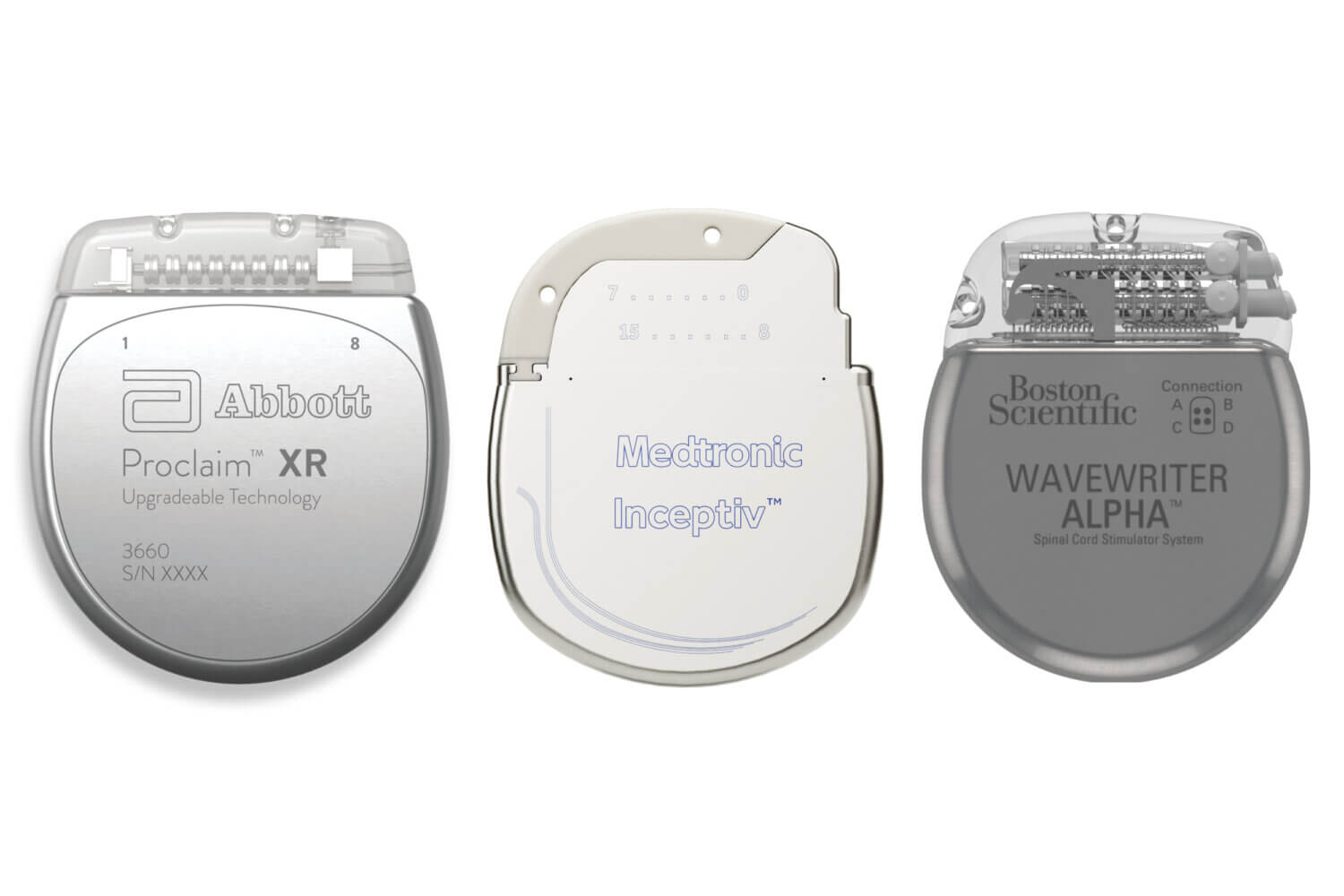
Many of the world’s top medical device companies make their own model of spinal cord stimulator. Abbott, Boston Scientific, and Medtronic all have their own proprietary SCS systems, each one a marvel of medical engineering. The best stimulator for you will depend on the type and source of your pain, as well as your pain management plan of care. Your provider will discuss this with you and then determine which stimulator will provide you with the greatest amount of pain relief.
So, there may be a “best” spinal cord stimulator for each individual, but there is no one best system overall.
Is spinal cord stimulation a new therapy?
It is not! Spinal cord stimulation was introduced as a treatment for chronic pain back in the late 1960s. It was officially approved by the U.S. Food and Drug Administration in 1984. However, recent advancements have resulted in spinal cord stimulators that are significantly more effective and hardly larger than a silver dollar.
Extensive research and development have also produced more specialized stimulations settings, targeted lead placements, and remote programming options, all allowing for even more optimal relief outcomes.
FUN FACT: The basic theory of electrical stimulation of the nervous system goes all the way back to ancient Rome!
Is spinal cord stimulation covered by my insurance?
Spinal cord stimulation therapy is covered by most insurance carriers. You will need an approval from your insurance company before you can receive SCS treatment. Insurance carriers usually require you to try conservative treatments first, such as physical therapy.
Medicare – Spinal cord stimulators are covered by Medicare, as long as it is deemed medically necessary. Medicare usually requires you to try conservative treatments first, such as physical therapy.
Workers’ Compensation – Most workers’ compensation carriers cover SCS with an approval before treatment.
Conclusion
Spinal cord stimulation is a well-established, highly-effective treatment for managing chronic pain. With a wide selection of models available, every spinal cord stimulation patient can have the device that is best suited to their needs. Spinal cord stimulation is a rapidly advancing technology. Innovative new advancements continue to make it one of the most effective treatments for managing chronic pain and restoring quality of life.

FAQs
Spinal cord stimulation (SCS) is a minimally invasive, drug-free therapy for chronic pain that uses electrical pulses to relieve pain. The system consists of thin leads with tiny electrodes that are placed next to specific nerves along the spinal cord, and a pulse generator (battery) that is implanted in the lower abdomen or upper buttock. The generator emits mild electrical pulses that travel through the leads and “stimulate” the targeted nerve fibers, blocking pain signals before they reach the brain.
Your pain management specialist will assess whether spinal cord stimulation (SCS) is right for you by reviewing the type, location, and severity of your chronic pain, along with your response to past treatments. If the doctor thinks SCS could be beneficial, you may go through a trial period. During the trial temporary leads are placed, and you wear the battery externally (like on a belt) for about a week to test how much pain relief you get. If the trial provides meaningful relief, you may proceed to an implanted device.
The sensation from spinal cord stimulation (SCS) depends on the device and program settings — some people feel a mild tingling (called paresthesia) in place of pain, while others may not feel anything at all when the stimulator is on. Because modern devices have many programming options, your care team can tailor the stimulation to create the most comfortable and effective sensation for you.
While many patients experience a significant and sustained reduction in chronic pain with spinal cord stimulation (SCS), it is not considered a cure. Because the underlying physical source of pain usually remains, relief levels can vary from person to person. Rather than eliminating pain entirely, SCS helps you manage pain in a way that allows you to enjoy an active and fulfilling life.
Spinal cord stimulation (SCS) is particularly effective for chronic neuropathic pain related to nerve issues, especially in the back, neck, and limbs. Examples include pain from diabetic peripheral neuropathy, phantom limb pain, sciatica, spinal stenosis, degenerative disc disease, and post-surgery pain.
Spinal cord stimulation (SCS) is covered by most insurance carriers (including Medicare) with a prior approval. Depending on the diagnosis, many insurance plans may require the patient to try conservative therapies, such as physical therapy or injections, before approving SCS.
Spinal Cord Stimulation at Twin Cities Pain Clinic
Twin Cities Pain Clinic is one of the foremost experts in spinal cord stimulation therapy. We are an SCS center for excellence and perform hundreds of stimulator implant procedures each year. Schedule a consultation with our pain management experts and learn how spinal cord stimulation can give you back the life you deserve.
The contents of this article are intended for informational and educational purposes only and are not intended as a substitute for professional medical advice, diagnosis or treatment. Always consult with a physician or other qualified healthcare provider before engaging in any action or decision-making based on the content of this article. Never disregard or delay seeking professional medical advice or treatment because of the content of this article or any other content on the Twin Cities Pain Clinic website. Reliance on any information conveyed on the Twin Cities Pain Clinic website without direct consultation with a healthcare professional is solely at your own risk.
Author Bio


