 Find a Pain Clinic
 952-841-2345

Does Chronic Pain Cause Anxiety?
Does anxiety cause pain, or is the other way around, with pain causing the anxiety? As it turns out, it’s actually both. Pain can be a common symptom, and sometimes a good indicator, of an anxiety disorder, particularly generalized anxiety disorder (GAD). Anxiety is a feeling of worry, nervousness, or unease.


Even long after a diagnosis, the daily demands of living with a chronic illness can continue to cause anxiety. Loss of mobility or other skills and abilities can lead to worry about safety, employment, financial stability, and a general inability to enjoy life. Ultimately, many may end up feeling overwhelmed with anxiety and struggle to cope.
Does anxiety cause chronic pain?
Yes, anxiety is a common source of chronic pain. As we mentioned earlier, those suffering an anxiety disorder are consistently in “stress mode.” While brief and infrequent stress reactions can be an important survival tactic, persistent exposure to stress can cause a variety of negative responses, including pain.
- Stress causes our hormones to trigger the body’s natural fight or flight response, which pumps extra adrenaline and cortisol into our blood stream. Eventually, excess levels of these chemicals can alter brain function, impair memory, disrupt sleep, and fuel persistent feelings of fear, worry, and panic, all of which can worsen anxiety. These chemicals can also cause inflammation, which is one of the most common causes of chronic pain throughout the body.
- According to the American Institute of Stress, our muscles tense up when we are stressed. This can lead to tension headaches and migraines, as well as pain in the neck, back, and shoulders. Muscle tension can also affect the body’s joints, causing pain, tenderness, and aches.
- Stress adversely affects the body’s nerves and how they function. The body’s nervous system sends and receives sensory information from the brain. This system of communication works well when the body and nervous system are healthy. However, problems can occur when the nervous system becomes hyper-stimulated due to the body’s natural response to stress.
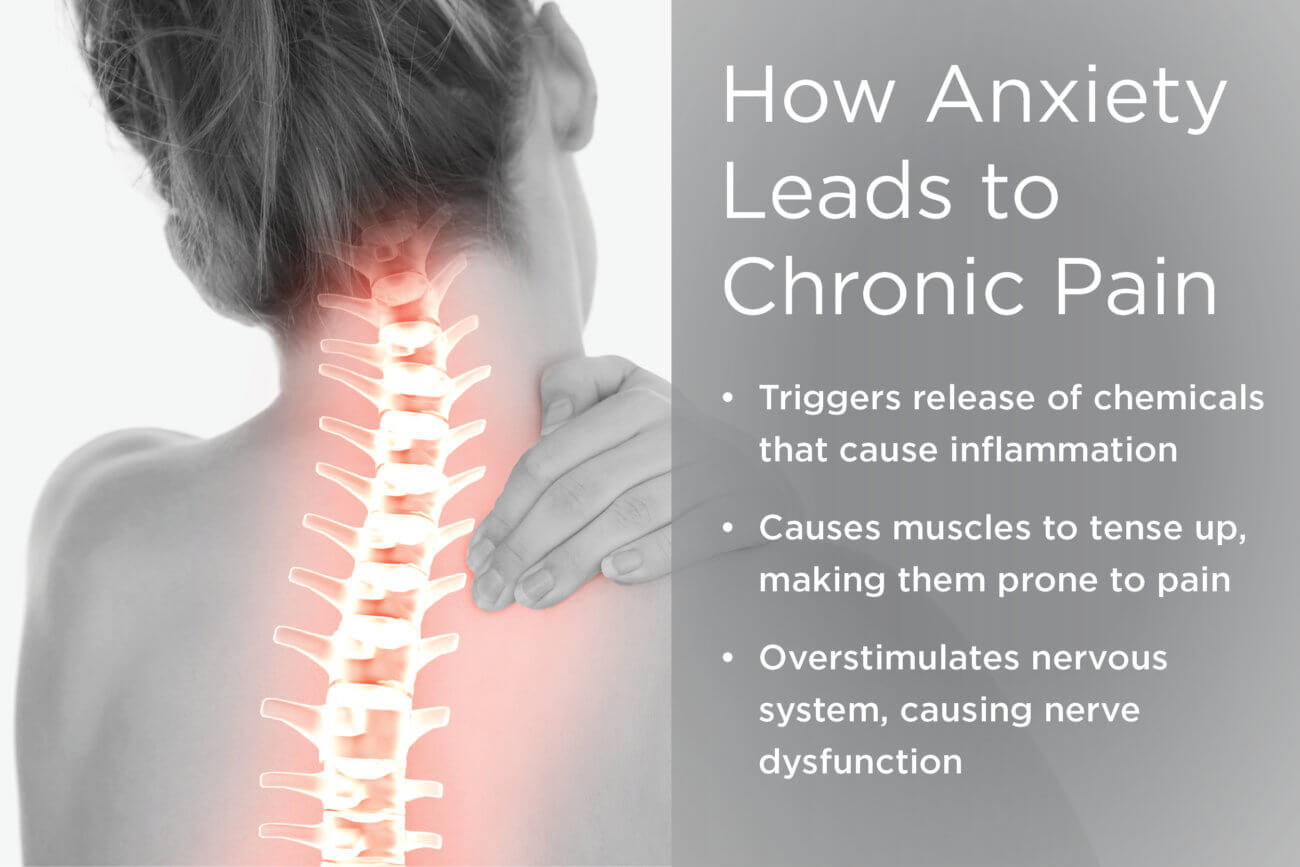
Consistently elevated stress can negatively affect any part of the body, including the skin, muscles, nerves and nerve endings, joints, and bones. As a result, pain can occur anywhere on the body. For some, the pain and tenderness are also accompanied by general fatigue and muscle weakness.
Reduce stress, relieve pain
Chronic pain and anxiety have a strong tie to each other. Persistent anxiety can eventually cause chronic pain for some people. Conversely, pain can be a common symptom or indicator of an anxiety disorder. Overcoming anxiety-induced chronic pain may require a variety of approaches.
Consider taking steps to relieve stress, that main ingredient of anxiety. Helpful activities include deep breathing, meditation, yoga, and muscle relaxation. You may also benefit from visiting a therapist to help you navigate your symptoms and find additional healthy means to manage stress.

You may also choose to take the opposite route and reduce your stress by treating your chronic pain. If you are experiencing chronic pain and anxiety, consider seeing a pain management specialist. These experts have extensive knowledge in the most advanced and effective interventional treatments to get chronic pain under control. Partnering with a local pain clinic to address your pain symptoms could go a long way toward improving your mental heath as well.
FAQs
Yes. Chronic pain significantly increases the risk of developing anxiety disorders, including generalized anxiety disorder (GAD). Studies cited in the blog note that people with chronic pain are up to three times more likely to experience anxiety due to ongoing stress, uncertainty, and the emotional toll of long-term symptoms.
Absolutely. Anxiety triggers the body’s stress response, increasing levels of cortisol and adrenaline. This can lead to inflammation, muscle tension, and nervous system overstimulation, all of which can heighten pain sensitivity and worsen chronic pain symptoms over time.
Chronic pain can cause anxiety by making people worry about their health, future, and daily functioning. That anxiety then amplifies pain perception and physical stress responses, which further worsens pain—creating a negative feedback loop that can spiral if untreated.
Anxiety is commonly associated with back pain, neck pain, shoulder pain, headaches, migraines, and widespread muscle and joint pain. Stress-related muscle tension and inflammation make the body more vulnerable to pain in multiple areas, even where no injury is present.
Yes. The blog explains that prolonged stress can overstimulate the nervous system, disrupt nerve signaling, and cause pain to appear internally or externally—even in the absence of a structural injury. This stress-induced pain may also come with fatigue and muscle weakness.
The most effective approach often addresses both conditions simultaneously. Stress-reduction techniques (like deep breathing, meditation, and yoga), mental health therapy, and working with a pain management specialist can help reduce pain severity while improving emotional well-being and quality of life.
Finding relief at Twin Cities Pain Clinic
Suffering from anxiety and chronic pain can be a difficult and challenging situation. But that definitely does NOT mean there isn’t hope for relief. Contact the experts at Twin Cities Pain Clinic to learn what inteventional pain management options could help relieve your pain and get you started on the road to emotional wellbeing too. Call our friendly team at 952-841-2345 or request an appointment online today.
If you can take control and manage your symptoms appropriately, you have the means to overcome your anxiety and return to a better, happier life.
The contents of this article are intended for informational and educational purposes only and are not intended as a substitute for professional medical advice, diagnosis or treatment. Always consult with a physician or other qualified healthcare provider before engaging in any action or decision-making based on the content of this article. Never disregard or delay seeking professional medical advice or treatment because of the content of this article or any other content on the Twin Cities Pain Clinic website. Reliance on any information conveyed on the Twin Cities Pain Clinic website without direct consultation with a healthcare professional is solely at your own risk.
Sources
- National Institute of Mental Health. “Chronic Illness and Mental Health: Recognizing and Treating Depression.” Www.nimh.nih.gov, 2021, www.nimh.nih.gov/health/publications/chronic-illness-mental-health
- “Chronic Pain | Anxiety and Depression Association of America, ADAA.” Adaa.org, 2019, adaa.org/understanding-anxiety/related-illnesses/other-related-conditions/chronic-pain
- Woo, Adam KM. “Depression and Anxiety in Pain.” Reviews in Pain, vol. 4, no. 1, Mar. 2010, pp. 8–12, 10.1177/204946371000400103
- Trevino, Kelly M., et al. “Managing Anxiety in Older Adults with Cancer – the ASCO Post.” Ascopost.com, ascopost.com/issues/august-10-2020/managing-anxiety-in-older-adults-with-cancer
Author Bio


