 Find a Pain Clinic
 952-841-2345

How a Pain Clinic Helps Treat Chronic and Acute Back Pain
Seeking help for persistent back pain can feel like a difficult step, but knowing what to expect can bring comfort and a sense of control. A dedicated pain clinic for back pain provides comprehensive, personalized care to help you find relief and improve your quality of life.

KEY TAKEAWAYS
- Pain clinics help diagnose and treat both acute and chronic back pain through personalized care plans designed around each patient’s symptoms, condition, and goals.
- Acute back pain is typically caused by injury or strain and often improves with short-term treatments, while chronic back pain may stem from underlying spinal or nerve conditions and requires more comprehensive management.
- A first pain clinic visit usually includes a detailed review of symptoms, medical history, physical examination, and imaging to determine the root cause of pain.
- Treatment options can range from medication, physical therapy, and activity modifications to advanced interventions such as injections, radiofrequency ablation, minimally invasive procedures, and implantable devices.
- Successful long-term back pain management focuses on reducing pain, improving function and quality of life, and supporting healthy habits such as exercise, proper posture, stress management, good sleep, and nutrition.
Table of Contents
- Understanding back pain
- Preparing for your first appointment
- What to expect
- Care planning
- Important lifestyle factors
Understanding back pain
Not all back pain is the same and understanding the difference between acute and chronic back pain is crucial in choosing the right treatment and setting realistic expectations for recovery.
Acute back pain
This type of pain begins suddenly, often after an injury, awkward movement, or strain. Acute back pain is typically short-term, usually lasting a few days to a few weeks. While it can be very intense, it often resolves as the body heals.
Common triggers include muscle strains, lifting something heavy, or a fall. With proper care, including rest, gentle activity, and sometimes short-term, over-the-counter medication, most people recover fully without long-term effects.
Chronic back pain
In contrast, chronic back pain persists for three months or longer, even after the initial injury has healed. This pain might be constant or intermittent, and it can sometimes be difficult to pinpoint a specific cause.
Chronic back pain is often related to ongoing health issues like degenerative disc disease, spinal arthritis, or nerve conditions. It can impact your daily activities and quality of life, requiring a more comprehensive, long-term management plan.
Before your first visit to a pain clinic for back pain
Preparing for your initial appointment is an important first step toward managing your back pain. Taking the time to understand your symptoms and gather your medical information helps your care team create the most effective treatment plan for you. This preparation ensures you feel heard and understood from the very beginning.
Identify your pain type
Recognizing which type of pain you’re experiencing helps your provider personalize your care. Treatment may focus on immediate relief and support for acute pain or building a multifaceted treatment strategy for chronic pain.
Most importantly, knowing the difference can offer peace of mind by helping you understand what to expect and how your pain can be managed.
Note specific symptoms
Pinpoint the exact location of your pain. On a scale of 1 to 10, how intense is it? What activities make it better or worse? Does the pain travel to other areas, like your legs or arms? Also, note any numbness, tingling, or weakness you may be experiencing.
Assess its impact on your life
Think about how your back pain affects your daily life. Does it interfere with your sleep, work, or hobbies? This information helps your provider understand how the pain is impacting your quality of life.
What to bring with you
To make your first visit to a pain clinic as smooth and productive as possible, please bring the following:
- Your photo ID and insurance card(s): Most clinics require this information as part of the standard check-in process. Having it on hand can make your appointment more efficient.
- Medical records: Gather any relevant medical records, including past diagnoses, treatments, and a list of current medications. The clinic staff can likely assist you in obtaining these records as well.
- Imaging results: If you have had any MRIs, CT scans, or X-rays related to your back pain, please bring the reports with you. Once again, there is a good chance that the clinic has a team of professionals who can request imaging on your behalf.
- A list of questions: Write down any questions or concerns you have. We want to make sure you leave your appointment with clarity and peace of mind.
What to expect during your pain clinic appointment
Your first appointment at a pain clinic is a partnership between you and your provider. They will listen to your story and work with you to develop a plan that addresses your unique needs and goals.
Comprehensive evaluation
Your provider will conduct a thorough evaluation to understand the root cause of your pain.
- Detailed medical history review: We will listen with compassion as you share the story of your back pain — when and how it started, how it has progressed, and how it affects your life. Your provider will carefully review your medical records to get a complete picture of your health.
- Thorough physical examination: Expect a focused physical assessment of your posture, range of motion, muscle strength, and reflexes. This hands-on exam is vital for identifying specific areas of concern and pinpointing the source of your pain.
- Review of diagnostic imaging: Your pain specialist will carefully examine any previous imaging you have. Correlating these findings with your symptoms and physical exam results helps confirm a diagnosis and guide treatment decisions.
Developing your personalized treatment plan
After your evaluation, your provider will discuss the findings and, together, you will create a personalized plan with a clear focus based on whether your pain is acute or chronic.
Treatment options for acute back pain
If your pain is acute, treatment often focuses on short-term relief and supporting your body’s natural healing process. This might include a brief course of medications for pain or inflammation, gentle physical therapy to restore movement, ergonomic guidance, and activity modifications.
Most cases of acute back pain improve within a few weeks, and your care plan will be designed to help you safely return to normal activities as soon as possible.
Treatment options for chronic back pain
For chronic pain, treatment is more comprehensive and may involve a combination of approaches to manage symptoms and address the underlying cause. Interventional options can include injections, radiofrequency ablation, minimally invasive augmentation and support procedures, and implantable pump and stimulator devices.
In these cases, your care plan is focused not just on symptom relief but also on regaining function, improving quality of life, and preventing flare-ups.
Setting realistic goals
Whether your back pain is acute or chronic, you and your provider will work together to establish achievable goals for pain relief and improved function. The approach is always tailored to help you return to the activities that matter most to you and support long-term well-being.
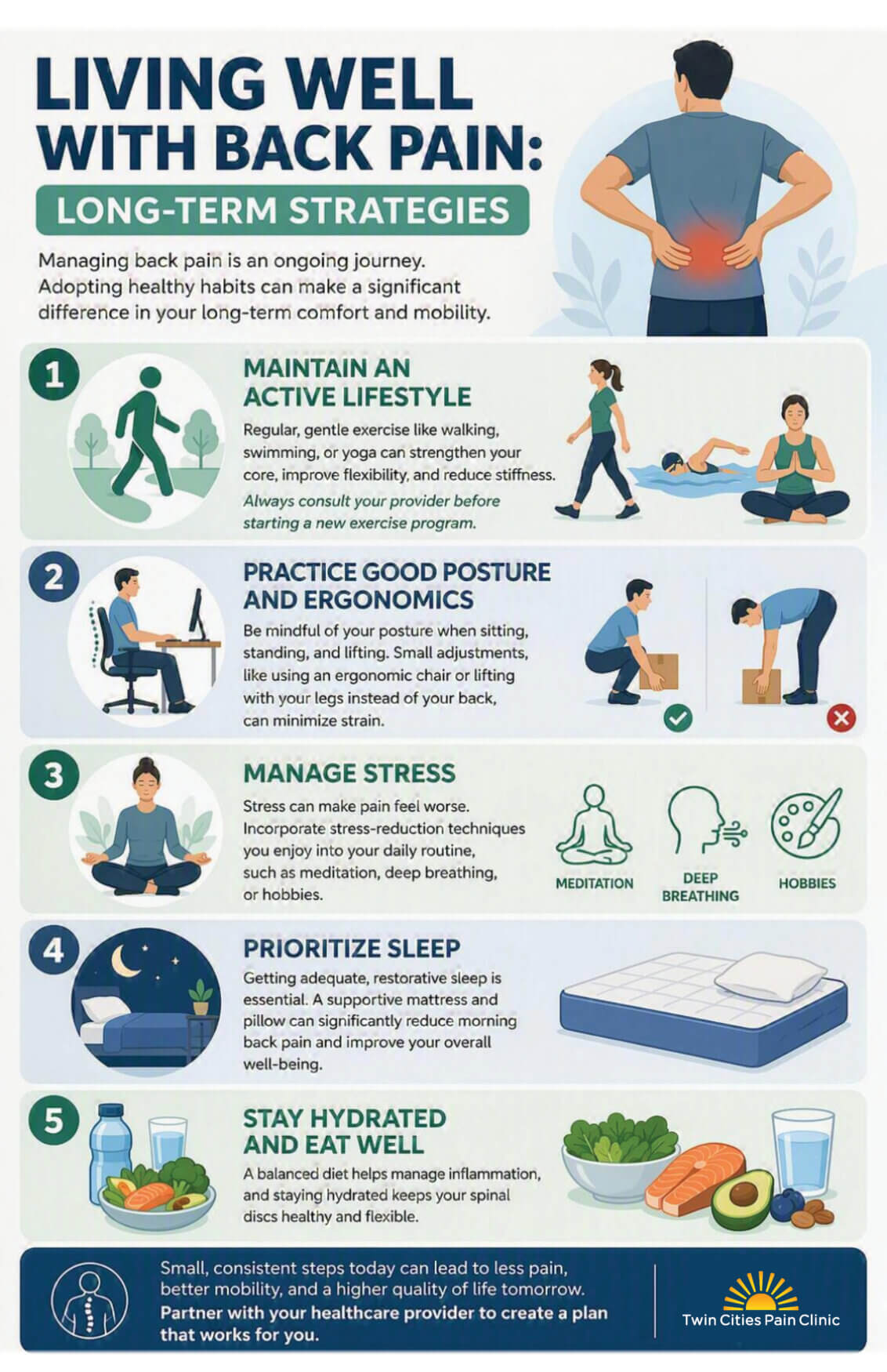
Living well with back pain: Long-term strategies
Managing back pain is an ongoing journey. Adopting healthy habits can make a significant difference in your long-term comfort and mobility.
Maintain an active lifestyle
Regular, gentle exercise like walking, swimming, or yoga can strengthen your core, improve flexibility, and reduce stiffness. Always consult your provider before starting a new exercise program.
Practice good posture and ergonomics
Be mindful of your posture when sitting, standing, and lifting. Small adjustments, like using an ergonomic chair or lifting with your legs instead of your back, can minimize strain.
Manage stress
Stress can make pain feel worse. Incorporate stress-reduction techniques you enjoy into your daily routine, such as meditation, deep breathing, or hobbies.
Prioritize sleep
Getting adequate, restorative sleep is essential. A supportive mattress and pillow can significantly reduce morning back pain and improve your overall well-being.
Stay hydrated and eat well
A balanced diet helps manage inflammation, and staying hydrated keeps your spinal discs healthy and flexible.
FAQs
Acute back pain develops suddenly, often due to an injury, strain, or awkward movement, and typically lasts from a few days to several weeks. Chronic back pain lasts three months or longer and may be linked to underlying conditions such as degenerative disc disease, arthritis, or nerve-related disorders. Understanding the type of pain you have is important because treatment approaches differ significantly.
You should consider visiting a pain clinic if your back pain is persistent, interferes with daily activities, affects sleep or work, or does not improve with basic treatments. Pain specialists can identify the root cause of your symptoms and develop a personalized treatment plan to help reduce pain and restore function.
During your initial appointment, a pain specialist will review your medical history, discuss your symptoms, perform a physical examination, and evaluate any imaging studies such as X-rays, MRIs, or CT scans. This comprehensive assessment helps determine the cause of your pain and guides treatment recommendations.
Pain clinics offer a range of treatments for chronic back pain, including medications, physical therapy, injections, radiofrequency ablation, minimally invasive procedures, and implantable pain management devices. Treatment plans are tailored to each patient’s condition, symptoms, and recovery goals.
Long-term back pain management includes staying physically active, maintaining proper posture, reducing stress, getting quality sleep, and following healthy nutrition and hydration habits. These lifestyle strategies can help improve mobility, support spinal health, and reduce the risk of recurring pain episodes.
Treating back pain at Twin Cities Pain Clinic
Are you ready to take the next step toward back pain relief? Call Twin Cities Pain Clinic at (952) 841-2345 or use our online form to request an appointment. We are here to help you find comfort and get back to living your best life.
Author Bio


