 Find a Pain Clinic
 952-841-2345

How does the Intracept® procedure treat chronic lower back pain?
Living with chronic lower back pain can feel like an overwhelming burden, draining both your physical and emotional well-being. When pain forces you to put your life on hold, it’s easy to lose hope. But there’s a path forward.
The Intracept® procedure is a groundbreaking, minimally invasive chronic lower back pain treatment, offering an alternative for those who wish to avoid major surgery. This guide will walk you through exactly how the Intracept® procedure works, the unique benefits it offers, and how our team can help you reclaim your daily life.
KEY TAKEAWAYS
- Intracept® targets the root cause of vertebrogenic pain. Unlike many back pain treatments that focus on muscles, discs, or joints, Intracept® is designed to treat pain originating from damaged vertebral endplates and transmitted by the basivertebral nerve (BVN) inside the spine.
- The procedure uses minimally invasive nerve ablation to stop pain signals. Intracept® applies targeted radiofrequency energy to disable the basivertebral nerve, preventing it from sending pain signals to the brain while preserving normal movement and sensation.
- Patients can achieve long-lasting relief without major spine surgery. Because Intracept® does not remove bone or fuse vertebrae, it preserves the spine’s natural structure and mobility while offering sustained pain reduction for appropriately selected patients.
- It fills a treatment gap when conservative therapies fail. Physical therapy, medications, and injections may not address pain that originates inside the vertebral bone. Intracept® offers an alternative for patients whose chronic low back pain has persisted despite these treatments.
- The ideal candidate has chronic low back pain with Modic changes visible on MRI. Patients who have experienced lower back pain for six months or more, have not found relief from conservative care, and show evidence of vertebrogenic pain on imaging may benefit from an Intracept® evaluation.
Table of Contents
- Understanding vertebrogenic pain and modic changes
- The Intracept procedure
- Benefits of Intracept
- Treatment comparison
- What to expect
- Recovery and outcomes
- Decision time
Understanding vertebrogenic pain and modic changes
To understand why the Intracept® procedure is so effective, it helps to look closely at the spine. For many individuals, chronic back pain does not actually come from damaged muscles, herniated discs, or pinched nerves. Instead, it originates inside the actual bones of the spine (the vertebrae).
This is known as vertebrogenic pain. According to the Cleveland Clinic, it specifically stems from degenerative wear and tear in the vertebral endplates, which are the top and bottom surfaces of your spinal bones. Over time, the stress of daily life can cause these endplates to degenerate, leading to inflammation. On an MRI scan, doctors can actually see this inflammation, referring to it as “Modic changes.”
When these Modic changes occur, a specific nerve located deep inside the bone — the basivertebral nerve (BVN) — picks up the pain signals and sends them straight to your brain. Because traditional therapies do not target the inside of the bone, they often fail to provide relief for this specific type of pain. The Intracept® procedure is specially designed to reach and address pain at this hidden source, offering hope where other treatments may fall short.
What is the Intracept® procedure?
The Intracept® procedure is a minimally invasive chronic lower back pain treatment specifically designed to quiet pain coming from the basivertebral nerve. Rather than altering the structure of your spine, Intracept® focuses entirely on stopping the pain signals at their very source.
How Intracept® works to relieve pain
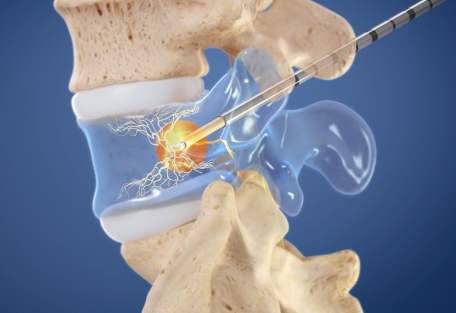
The Intracept® procedure works by using advanced radiofrequency energy to gently heat and disable the basivertebral nerve inside the vertebral body. In the medical field, this is called nerve ablation, and Intracept® is uniquely engineered for this purpose.
By safely applying this targeted heat, the Intracept® procedure effectively stops the nerve from transmitting those relentless pain signals from your inflamed vertebral endplates to your brain.
Because this specific nerve does not control any necessary motor functions or physical sensations in your legs, disabling it with Intracept® safely interrupts the pain pathway without causing weakness or numbness. The result is significant, long-lasting relief from chronic lower back pain.
The unique benefits of this chronic lower back pain treatment
When evaluating your options for pain relief, it is important to look at how a procedure impacts your body and your future. The Intracept® procedure offers several incredible benefits that make it stand out among other therapies.
A minimally invasive approach
Unlike major spine surgeries that require large incisions and lengthy hospital stays, the Intracept® procedure is minimally invasive. It relies on a tiny incision and specialized instruments, which means less trauma to your body, a lower risk of complications, and a much faster return to your normal life.
Preserving your spinal structure
Many surgical options involve removing bone or fusing vertebrae together, which permanently changes the physical mechanics of your spine. The Intracept® procedure simply targets a nerve inside the bone. By preserving your natural spinal structure, Intracept® helps you maintain your normal range of motion and flexibility.
Long-lasting, proven relief
Perhaps the most encouraging benefit is the longevity of the results. According to a study published by the International Pain & Spine Intervention Society (IPSIS), patients who undergo basivertebral nerve ablation, like the Intracept® procedure, experience sustained pain reduction that lasts for up to 6 months.
This is not a temporary band-aid. The Intracept® procedure is a long-term chronic lower back pain treatment designed to help you thrive.
Comparing Intracept® to alternative treatments
Finding the right path to healing means comparing all your options. Here is how Intracept® stands apart from other common approaches.
- Conservative therapies (physical therapy and medications): While physical therapy strengthens muscles and medications reduce inflammation, neither can stop the deep nerve pain inside the bone caused by Modic changes.
- Epidural steroid injections: Injections provide excellent temporary relief but do not penetrate the bone to reach the basivertebral nerve.
- Spinal fusion surgery: This major operation is often overly aggressive for patients whose only issue is vertebrogenic nerve pain, for which Intracept® offers a powerful alternative without the extensive recovery.
The Intracept® treatment process: what to expect
Understanding each step of your care journey with Intracept® can help ease any anxiety you might feel. From your very first consultation to your recovery, our compassionate team is here to guide and support you every step of the way.
Before your procedure
Your journey with Intracept® begins with a thorough consultation, where we will:
- Review your medical history
- Perform a physical exam
- Closely examine your MRI scans to confirm the presence of Modic changes
Once we determine you are a candidate for the Intracept® procedure, you will receive clear, detailed pre-procedure instructions. We will ensure every single one of your questions is answered so you feel completely confident about your chronic lower back pain treatment.
During the procedure
The Intracept® procedure is performed on an outpatient basis. You will receive conscious sedation or general anesthesia to ensure you are entirely comfortable and relaxed. A specialized doctor will make a small incision in your back and guide a tiny cannula to the target vertebra using continuous X-ray guidance.
The Intracept® system then delivers radiofrequency energy to ablate the basivertebral nerve. The entire Intracept® procedure typically takes just 60 to 90 minutes, allowing you to benefit from advanced chronic lower back pain treatment with minimal disruption to your life.
After your procedure
Following the Intracept® treatment, you will spend a short time resting in our comfortable recovery room while our team monitors you. Because the Intracept® procedure is performed on an outpatient basis, you can return to the comfort of your own home the very same day. Some patients experience mild soreness at the small incision site, which is usually easily managed with over-the-counter pain relievers.
Realistic recovery and patient outcomes
Recovery from this innovative chronic lower back pain treatment is generally straightforward. We encourage you to rest and avoid strenuous activities or heavy lifting for about a week to let your body heal.
While a few patients report feeling immediate comfort after their Intracept® procedure, it is completely normal for pain reduction to happen gradually over a few weeks. Many patients notice a significant drop in their pain levels within two to eight weeks, with the full benefits of Intracept® often blooming by the three-month mark.
Is Intracept® right for you?
This procedure is specifically designed for a certain type of back pain. You may be an ideal candidate for Intracept® restorative therapy if you meet the following criteria:
- You have struggled with chronic lower back pain for at least six months.
- Your pain has not improved with conservative treatments like physical therapy, chiropractic care, or injections.
- Your MRI shows clear evidence of Modic changes in your lower spine.
- You do not have an active infection or a previous spinal fusion at the targeted vertebral levels.
While complications with the Intracept® procedure are incredibly rare, it is important to know that side effects like temporary localized soreness or mild bruising can occur. Your doctor will discuss all potential risks associated with Intracept® with you in an open, honest conversation, ensuring that you feel fully informed and confident about your treatment choices.
FAQs
The Intracept® procedure is a minimally invasive treatment designed to address vertebrogenic low back pain. It works by targeting the basivertebral nerve (BVN), which is located inside the vertebrae bones. The BVN carries pain signals from damaged vertebral endplates to the brain. Using radiofrequency energy, the procedure burns the nerve to interrupt those pain signals and help provide long-term relief.
The best candidates for Intracept® are patients who have experienced chronic low back pain for at least six months, have not achieved adequate relief from conservative treatments such as physical therapy, medications, or injections, and have MRI evidence of Modic changes in the vertebrae. A comprehensive evaluation is necessary to determine whether the procedure is appropriate for your condition.
Modic changes are signs of inflammation and degeneration inside the bones of the spine that can be seen on an MRI. They occur when the vertebral endplates—the thin layers of tissue that connect the spinal bones to the discs—become damaged over time, which can trigger chronic lower back pain. For many patients, identifying Modic changes helps doctors determine whether the pain is vertebrogenic and whether the Intracept® procedure may be an effective treatment option.
Recovery is typically much faster than traditional spine surgery because Intracept® is performed through a small incision on an outpatient basis. Most patients can return home the same day and resume most normal activities in less than a week. While some people notice pain relief quickly, the full benefits often develop gradually over several weeks to a few months.
Yes. For patients whose pain is caused by vertebrogenic inflammation and Modic changes, Intracept® can be an effective alternative to more invasive procedures such as spinal fusion. The treatment targets the source of pain without removing bone, fusing vertebrae, or altering the natural structure and movement of the spine.
Clinical studies have demonstrated significant and sustained pain reduction following basivertebral nerve ablation. Many patients experience meaningful improvements in pain levels, function, and quality of life after treatment, making Intracept® a promising option for individuals with vertebrogenic back pain.
Intracept® chronic lower back pain treatment in Minnesota
You do not have to accept persistent discomfort as a permanent part of your story. The Intracept® procedure offers a promising option for long-lasting relief without the burden of major surgery.
At Twin Cities Pain Clinic, we are your partners in care. Each of our friendly providers is a specially trained pain management expert, ready to help you achieve the relief you deserve with advanced options like Intracept®. Our specialists will carefully determine the cause of your pain and create a personalized care plan to help you get back to living your best life.
If you’d like to learn more about Intracept®, call our practice today at (952) 841-2345 or use our online appointment request form to schedule your comprehensive consultation.
Author Bio


